Written by Daniel Kirchschlager
Elegance and grandeur define Valtice Chateau, one of the most impressive historic residences in the South Moravian Region. Although the site was fortified as early as the medieval period, the first known written reference to Valtice dates to 1193. The estate later became closely associated with the Liechtenstein family, which brought the property under its control between 1387 and 1391 and retained it until 1945. During the 16th century, the medieval castle was transformed into a Renaissance residence, reflecting the family’s growing influence and changing expectations of aristocratic life. Further major reconstruction took place during the 17th and 18th centuries, when renowned architects and builders helped shape the chateau into a magnificent Baroque complex. Its monumental facades, elaborate interiors, ceremonial halls, and extensive adjoining buildings reflect the wealth and status of the Liechtenstein princes, who used Valtice as a principal family residence. The chateau’s architectural development also mirrors broader changes in European design, from medieval fortifications to Renaissance refinement and Baroque grandeur. Today, Valtice Chateau forms an important part of the Lednice-Valtice Cultural Landscape, which was inscribed on the UNESCO World Heritage List in 1996. Its richly decorated interiors and impressive architectural ensemble offer visitors a glimpse into the history of one of Central Europe’s influential noble families.
The chateau acquired much of its present appearance during an extensive rebuilding campaign carried out between 1643 and 1730. The transformation followed designs associated with the Italian architect D. Martinelli and Johann Bernhard Fischer von Erlach, two influential figures whose work helped introduce sophisticated Baroque architectural ideas to the region. Their involvement contributed to the creation of a residence that was designed not merely as a defensive structure but as an imposing aristocratic seat.
Valtice is organized as a three-story, four-winged building surrounding a central courtyard. Its substantial scale reflects the importance of the residence and the ambitions of the noble family that developed it. Baroque architecture emphasized symmetry, monumentality, and carefully planned spaces, and these principles can be seen throughout the chateau’s overall design.
The complex was also created to support many different aspects of aristocratic life. Stables and a riding school formed an important part of the estate, reflecting the traditional role of horses in noble culture and transportation. Such facilities were also associated with displays of wealth and status, particularly at major aristocratic residences where equestrian activities formed part of courtly life.
Art and entertainment were equally important at Valtice. The chateau includes spaces associated with art galleries and a theater, demonstrating how noble residences became centers of cultural and social activity. The presence of a theater is especially significant because performances, music, and other forms of entertainment played an important role in the life of European aristocratic households.
Another distinctive feature of the complex is its Rococo carriage house. Designed to accommodate and display elaborate horse-drawn vehicles, the carriage house reflects the practical needs of an aristocratic estate while also demonstrating the importance of luxury and presentation during the period. Together with the stables and riding school, it forms part of a broader complex devoted to transportation, horses, and courtly life.
Today, Valtice Chateau stands as a remarkable example of the transition from medieval fortress to Renaissance residence and finally to an elaborate Baroque palace. Its three-story architecture, four wings, historic riding facilities, galleries, theater, and Rococo carriage house reveal the extraordinary range of functions that a major aristocratic residence could contain. Located in South Moravia, Valtice remains one of the region’s most important architectural and cultural landmarks.
For more information about this attraction, visit the relevant website here
This post was created by volunteers. You may help and support by clicking here.
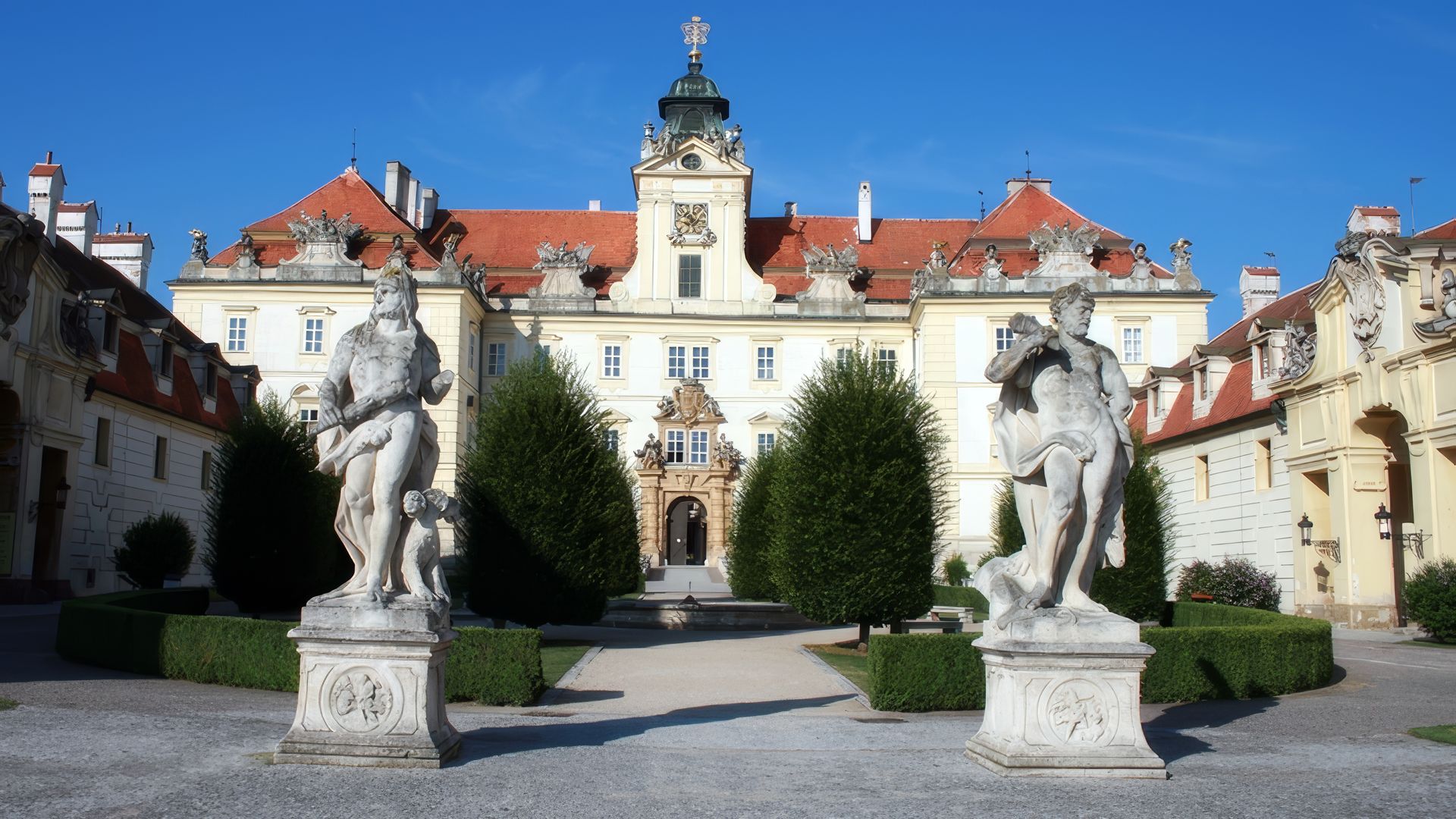
Valtice Chateau
Visit our partners website.