Written by Daniel Kirchschlager
Richly decorated interiors give Detenice Chateau a distinctive character, reflecting centuries of architectural change and aristocratic taste. Located in the Hradec Kralove Region, the chateau developed from an early fortified residence into a Gothic stronghold before being transformed into a Renaissance manor house in the late 16th century. Its present appearance largely dates from a major late Baroque reconstruction carried out between 1762 and 1765 under the direction of Zacharias Fiegert. Inside, visitors can explore furnished rooms featuring wall paintings created using fresco and secco techniques, together with elaborate Baroque and Rococo stucco decorations. The interiors are based largely on archival material from the 18th century and offer an impression of the lifestyle and decorative preferences of the landed nobility. The chateau’s history continued through several changes of ownership, including a period under the Order of the Knights of Malta in the late 19th century. After decades of changing uses and gradual deterioration during the 20th century, the building underwent extensive restoration following its purchase in 1998 and reopened to visitors in 2000. Today, its decorated rooms, historic furnishings, and surrounding park make Detenice Chateau an appealing destination for visitors interested in aristocratic life, historic interiors, and the evolution of Czech architecture.
The preserved frescoes and murals are among the most notable features of Detenice. Gothic and Renaissance artistic elements provide a connection with the earlier history of the residence, while later Baroque decorations demonstrate the growing preference for more elaborate and dramatic interiors. Rococo and Neoclassical stucco work adds further variety, creating rooms in which several centuries of artistic development can be appreciated within the same historic complex.
Visitors can also discover collections that reflect the lifestyle and interests of the people who once lived at the chateau. Paintings form an important part of the interior decoration, adding both artistic and historical value to the rooms. The collection of antique weapons provides another perspective on aristocratic life, while hunting trophies recall the traditional importance of hunting for noble families and their estates.
Detenice is particularly distinctive because its historical atmosphere extends beyond the architecture and collections. The chateau hosts period events designed to bring elements of the past to life, including Rococo balls and medieval banquets. Such occasions offer visitors a more immersive experience and highlight the social traditions associated with historic aristocratic residences. Costumes, historic settings, food, and entertainment can help create an atmosphere inspired by earlier centuries.
The surrounding park provides another important part of the chateau experience. Numerous statues have been preserved throughout the grounds, including works reflecting Classical and Baroque traditions. Their placement among the landscaped areas contributes to the decorative character of the estate and creates an attractive transition between the formal interiors and the surrounding countryside.
Walking through the park allows visitors to appreciate the chateau from different perspectives. Historic sculptures, greenery, and the architecture of the main residence combine to create a setting that reflects the long tradition of European aristocratic estates, where gardens were designed not only for recreation but also as carefully planned extensions of the residence.
Today, Detenice Chateau offers much more than a view of historic architecture. Its preserved frescoes, murals, stucco decorations, paintings, antique weapons, hunting trophies, sculptures, and period events provide multiple ways to explore the past. The combination of Gothic, Renaissance, Baroque, Rococo, and Neoclassical elements makes Detenice a particularly diverse historic site, while its living program of balls and medieval banquets gives visitors an opportunity to experience the atmosphere of earlier centuries in a memorable setting.
For more information about this attraction, visit the relevant website here
This post was created by volunteers. You may help and support by clicking here.
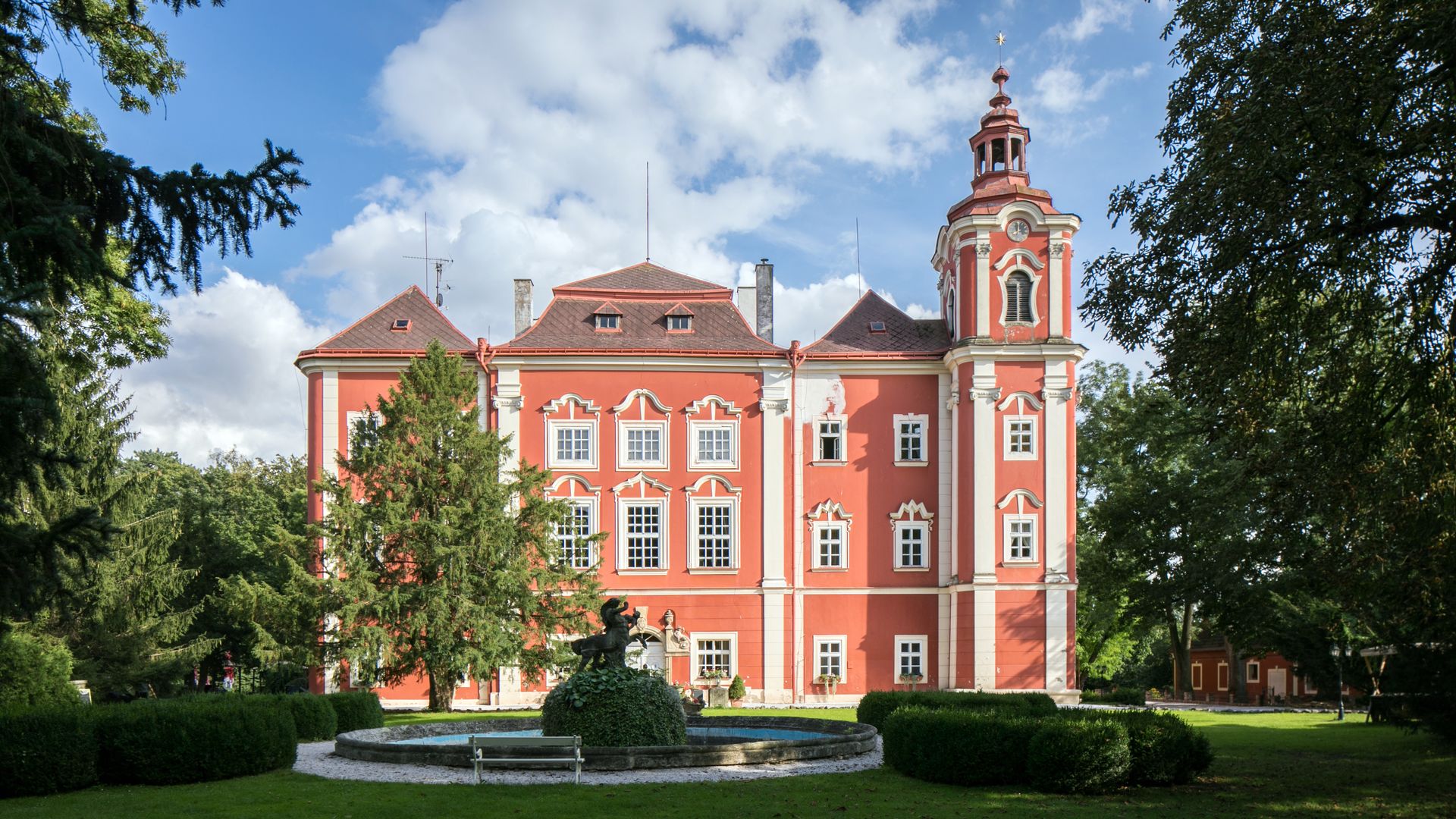
Detenice Chateau
Visit our partners website.