Written by Daniel Kirchschläger
Surrounded by the calm waters of a picturesque pond, Cervena Lhota Chateau (Zamek Cervena Lhota) is one of the most distinctive historic landmarks in the South Bohemian Region of the Czech Republic. Its striking red facade, elegant Renaissance appearance, and romantic island setting make it a popular destination for visitors interested in Czech castles, historic architecture, and the cultural heritage of Central Europe. Located in the countryside near the town of Kardasova Recice, the chateau offers a memorable combination of architectural beauty, centuries of history, and peaceful natural surroundings. Unlike many historic residences built on hills or within fortified towns, Cervena Lhota Chateau stands on a small rocky island in a pond, giving the building its characteristic appearance.
The history of Cervena Lhota Chateau dates back to the medieval period, when a fortified residence occupied the site. The earliest written record of the original fortress dates from 1465, although its origins are believed to be older. Around 1530, the property came into the possession of the Kaba family of Rybnany, who initiated its transformation from a medieval stronghold into a Renaissance residence. During the 16th century, the building gradually developed into a more comfortable aristocratic home, with four wings surrounding a small courtyard. The architectural changes established the foundations of the distinctive layout that visitors can still recognize today.
The chateau’s red appearance is one of its most recognizable features and is closely connected with the history of its name. During the 16th century, the building underwent significant alterations, and its exterior was painted red. The name Cervena Lhota, which translates approximately as Red Lhota, subsequently became associated with the residence. Over time, the surrounding landscape was also transformed, creating the unusual impression that the chateau rises directly from the water. A stone bridge connects the island with the shore, providing the traditional approach to the historic building and adding to its romantic character.
During the 17th century, Cervena Lhota Chateau underwent further architectural changes. In 1641, the estate was acquired by Vilém Slavata of Chlum and Kosumberk, an influential Bohemian nobleman who held important positions in the Habsburg administration. Under the Slavata family, the chateau received Baroque modifications and gradually became a summer residence rather than the principal seat of a large aristocratic estate. These changes contributed to the character of the interiors and reflected the evolving preferences of European noble families during the period.
The property later passed through several aristocratic families before becoming the possession of the Schönburg-Hartenstein family in 1835. During the 19th century, the chateau underwent romantic architectural modifications inspired by historic styles. Further alterations around the beginning of the 20th century introduced Neo-Renaissance elements, helping establish the appearance associated with Cervena Lhota Chateau today. The estate remained in aristocratic ownership until the end of World War II, when it was confiscated by the Czechoslovak state. After a period of institutional use, the chateau opened to the public in 1949.
Today, Cervena Lhota Chateau is a popular historical attraction for visitors exploring the South Bohemian Region. Guided tours introduce guests to the historic interiors, aristocratic furnishings, and architectural development of the residence. The surrounding grounds offer opportunities to admire the building from different perspectives, walk beside the pond, and enjoy the peaceful countryside. A nearby chapel dedicated to the Holy Trinity adds another historical feature to the estate and reflects the religious traditions associated with the property.
For travelers searching for beautiful castles in the Czech Republic, Renaissance chateaus in South Bohemia, or historic attractions surrounded by nature, Cervena Lhota Chateau offers an exceptional experience. Its vivid red exterior, island location, and long architectural history distinguish it from many other European residences. Whether admired from the stone bridge, explored during a guided tour, or photographed from the surrounding paths, Cervena Lhota Chateau remains an enduring symbol of the Czech Republic’s rich architectural heritage and the romantic landscapes of southern Bohemia.
For more information about this attraction, visit the relevant website here
This post was created by volunteers. You may help and support by clicking here.
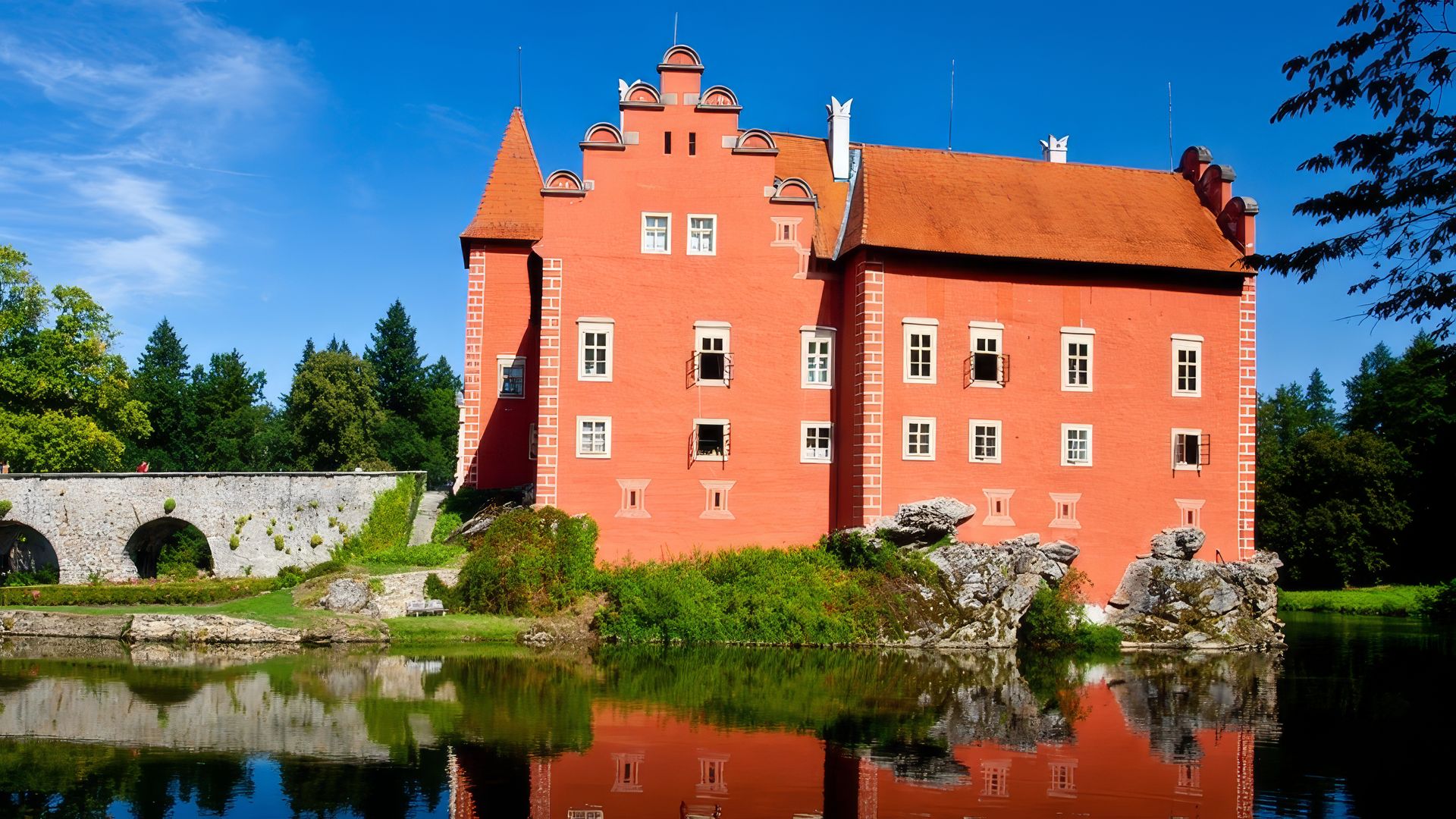
Cervena Lhota Chateau
Visit our partners website.