Written by Daniel Kirchschläger
Rising above the historic town of Mikulov, Mikulov Chateau is one of the most impressive architectural landmarks in the South Moravian Region of the Czech Republic. Positioned on a prominent rocky hill overlooking the town and the surrounding vineyards, this historic residence combines centuries of political history, Renaissance architecture, Baroque elegance, and cultural heritage. Its commanding location near the Austrian border has made it an important landmark in southern Moravia for centuries. Today, Mikulov Chateau attracts visitors interested in Czech history, historic castles, wine culture, and the picturesque landscapes of the Pálava region.
The origins of Mikulov Chateau date back to the medieval period, when a fortified settlement occupied the hill above the town. Archaeological discoveries indicate that a wooden structure stood on the site during the second half of the 11th century. A stone castle subsequently developed as part of the defensive system along the historic Moravian-Austrian border. In 1249, the castle and estate came into the possession of Heinrich I of Liechtenstein, establishing a long association between Mikulov and one of the influential noble families of Central Europe. Under the Liechtensteins, the castle was expanded to accommodate the family’s growing needs and became an important aristocratic residence in Moravia.
A significant transformation began in the 16th century, when the castle underwent extensive reconstruction and acquired Renaissance defensive features. The property changed hands in 1560 and was acquired by Adam of Dietrichstein in 1575. The Dietrichstein family subsequently played a central role in the development of Mikulov Chateau and the surrounding town. Under their ownership, the former medieval fortress gradually became a prestigious residence that reflected the architectural fashions and cultural ambitions of the European aristocracy. Renaissance and later Baroque modifications shaped the complex, while new halls, residential wings, and decorative interiors contributed to its increasingly elaborate appearance.
One of the most influential figures associated with Mikulov Chateau was Cardinal Franz von Dietrichstein, who helped establish Mikulov as an important political, religious, and cultural center in Moravia during the early 17th century. His influence extended beyond the castle itself, contributing to the architectural development of the town. The estate also witnessed important historical events, including the signing of the Peace of Mikulov in 1621, which ended the conflict between the forces of Gabor Bethlen of Transylvania and Emperor Ferdinand II. In 1805, Napoleon Bonaparte visited Mikulov Chateau, adding another notable episode to its long history.
The appearance of Mikulov Chateau was dramatically affected by a major fire in 1719, which destroyed much of the complex. The residence was subsequently rebuilt and developed into the impressive Baroque chateau visible today. The reconstruction included architectural changes, decorative interiors, and new elements that reflected the artistic preferences of the period. Another devastating fire occurred in April 1945, destroying much of the building and its historic furnishings. Extensive restoration work began after the war, and the reconstructed chateau became the home of the Regional Museum in Mikulov in 1959.
Today, Mikulov Chateau serves as an important cultural attraction and museum. Visitors can explore historical exhibitions, discover the story of the Dietrichstein family, and admire the architecture of the restored residence. Among its notable features are the Hall of Ancestors, the historic library, and the impressive Baroque interiors. Museum exhibitions also introduce visitors to the history, archaeology, and cultural traditions of the surrounding region. The elevated position of the chateau provides memorable views of Mikulov, its historic streets, nearby vineyards, and the rolling landscape of the Pálava Hills.
Mikulov is also widely associated with South Moravian wine culture, making the chateau an appealing destination for travelers who want to combine historical sightseeing with regional gastronomy and wine tourism. The surrounding countryside features vineyards, walking routes, and natural attractions that complement the town’s architectural heritage. For visitors searching for historic castles in the Czech Republic, Baroque architecture in South Moravia, or cultural attractions near the Austrian border, Mikulov Chateau offers a distinctive experience. Its medieval origins, aristocratic history, dramatic reconstruction, and panoramic setting make it an enduring symbol of the historical and cultural richness of southern Moravia.
For more information about this attraction, visit the relevant website here
This post was created by volunteers. You may help and support by clicking here.
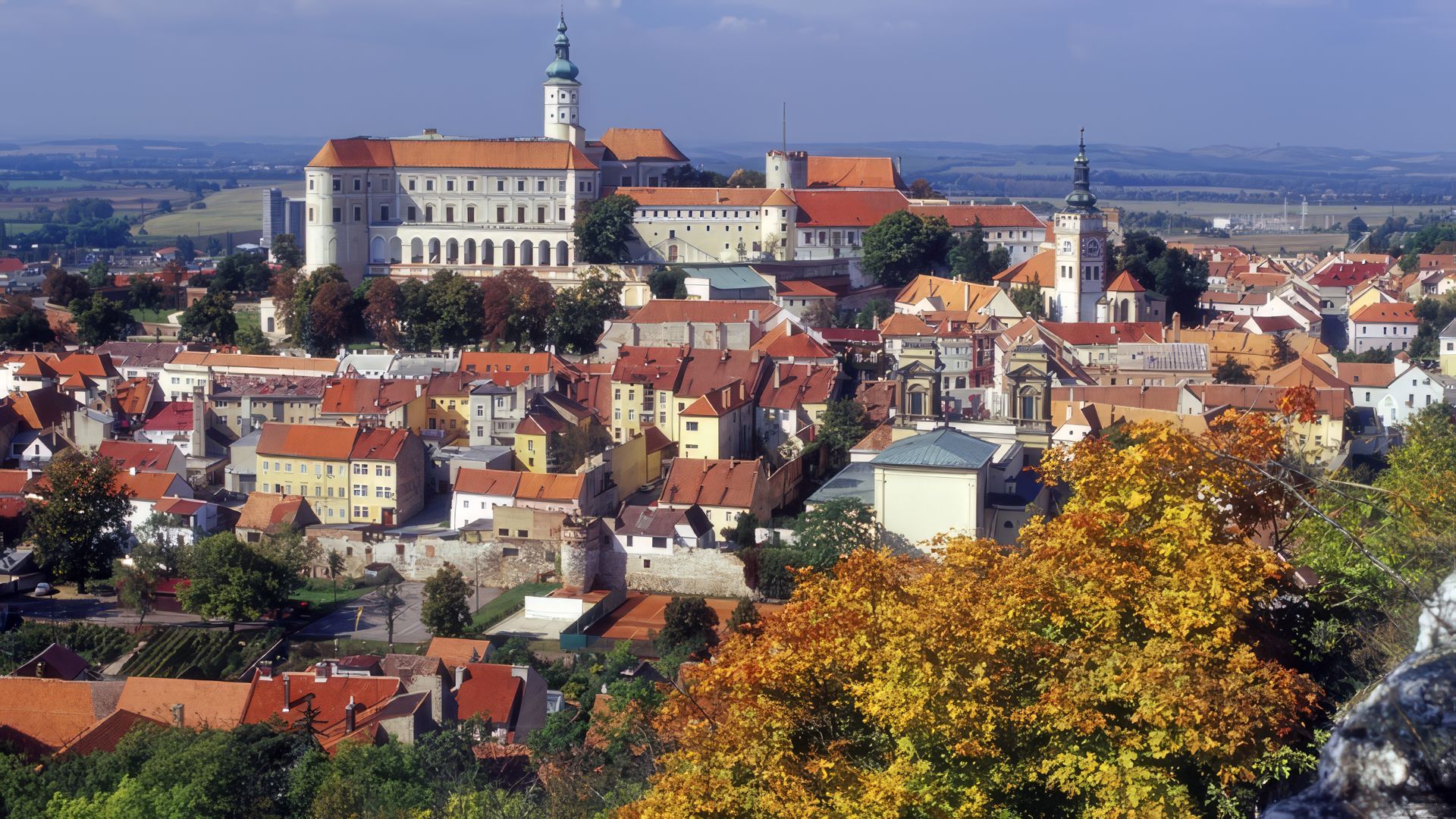
Mikulov Chateau
Visit our partners website.