Written by Daniel Kirchschlager
Built high above the surrounding countryside, Karlstejn Castle ranks among the most famous Gothic castles in the Czech lands and remains closely connected with the reign of Charles IV. Founded in 1348 by Charles IV, King of Bohemia and later Holy Roman Emperor, the castle was designed both as a royal residence and as a secure place for safeguarding precious objects associated with the monarchy and the Holy Roman Empire. Located in the Central Bohemian Region, Karlstejn Castle was built with a carefully planned system of fortifications and a series of buildings arranged up the rocky hillside. Its most important space was the Chapel of the Holy Cross in the Great Tower, where imperial treasures and sacred relics were kept. Construction continued for many years, and the chapel was consecrated in 1365, marking a major milestone in the castle’s development. Beyond its defensive role, Karlstejn also served as a representative residence for Charles IV, reflecting the political and religious importance of his reign. Later modifications altered parts of the castle, but its distinctive Gothic character remains central to its appeal. Today, Karlstejn is admired for its dramatic setting, historic chapels, impressive towers, and enduring connection with one of the most influential rulers in Czech history.
Charles IV established Karlstejn during a period when his political and religious influence was growing throughout Europe. The castle was intended to provide a secure location for valuable treasures that required exceptional protection. Among the most important objects kept at Karlstejn were the Imperial Regalia, which represented the authority of the Holy Roman Empire. The castle also served as a repository for the Czech crown jewels, holy relics, and other royal treasures, giving the fortress an importance that went far beyond its defensive role.
The location of Karlstejn was carefully chosen. Rising above the landscape southwest of Prague, the castle occupies a commanding position surrounded by wooded hills and valleys. Its elevated setting enhanced its defensive qualities while also giving the complex a powerful visual presence. Visitors approaching the castle today can still appreciate why such a location would have been considered suitable for protecting objects of extraordinary political and religious value.
Karlstejn developed as a carefully organized Gothic complex with several levels and buildings serving different purposes. The arrangement reflected the hierarchy and importance of the castle’s functions, with sacred and royal spaces occupying particularly significant positions. Its architecture was designed to communicate both strength and prestige, characteristics that were essential for a residence associated with one of the most influential rulers of medieval Europe.
Religious symbolism played an especially important role in the castle’s original purpose. The presence of holy relics and royal treasures gave Karlstejn a character that combined political authority with Christian devotion. Protection of such objects required more than massive walls; the entire complex became a place where imperial power, royal tradition, and religious significance came together.
Today, Karlstejn Castle remains one of the most visited historic landmarks in the Czech Republic. Its Gothic appearance, connection with Charles IV, and extraordinary role in safeguarding imperial and royal treasures have secured its place in Czech history. Set within a picturesque landscape not far from Prague, Karlstejn offers visitors an opportunity to explore one of the most important medieval castles in the country while gaining a deeper understanding of the political and religious world of the 14th century.
For more information about this attraction, visit the relevant website here
This post was created by volunteers. You may help and support by clicking here.
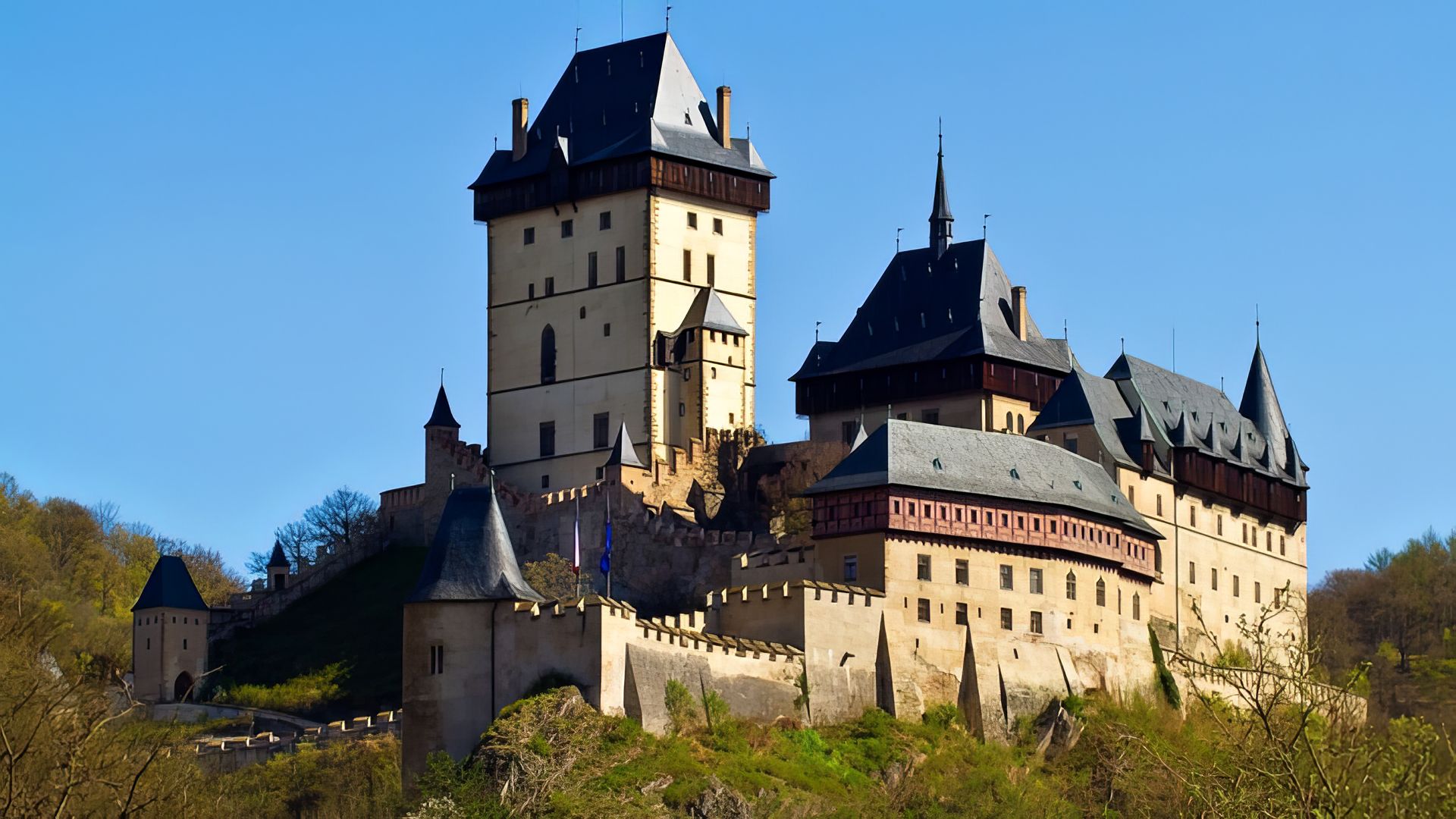
Karlstejn Castle
Visit our partners website.