Written by Karel Vasut
With their soft pastry dough, sweet fillings, and distinctive round shape, Moravian kolaches are one of the best-known varieties of traditional Czech pastry and an important part of Czech culinary heritage. These delicious Czech pastries have helped introduce Czech food traditions to audiences around the world. The name kolace comes from the Old Czech word “kolo,” meaning “circle” or “wheel,” a reference to the traditional round shape of the pastry. In Czech, one pastry is called a kolac, while the plural form is kolace. When Czech immigrants brought these sweet pastries to the United States during the nineteenth century, especially to agricultural communities in Texas, Iowa, and Minnesota, they became widely known to Americans simply as kolaches.
Traditional Czech kolaches vary considerably from one region to another. In some northern and western parts of the Czech lands, bakers prepare large, tart-like kolaches with generous amounts of filling. These larger pastries are often cut into pie-shaped portions before serving. In other regions, smaller individual kolaches are more common. Despite these regional differences, the classic Czech kolac is traditionally round, a shape historically associated with the sun, unity, family gatherings, and seasonal celebrations.
Moravian kolaches are especially similar to the Czech-style kolaches that have become popular in the United States. They are small, round, open-faced pastries made from a rich and slightly sweet yeast dough. When properly baked, the dough becomes soft, airy, tender, and pillowy. Traditional Moravian kolache fillings include sweet farmer’s cheese, known as tvaroh, thick spiced plum butter called povidla, ground poppy seed filling, and fruit preserves made from locally grown fruits such as cherries, plums, and apricots. Many Moravian kolaches are finished with a delicate layer of buttery sweet streusel, known as drobenka, which adds a pleasant contrast of texture and flavor.
Moravian kolaches have a history stretching back more than 200 years and have long been associated with important Czech family and community traditions. They have traditionally been served at weddings, village festivals, holidays, and Sunday family gatherings. Because of their connection with celebrations and hospitality, Czech kolaches have become an enduring symbol of Czech baking and cultural heritage.
Today, Moravian kolaches remain deeply rooted in the culinary traditions of South Moravia, the Olomouc Region, and the Zlin Region. Local bakers continue to prepare these traditional Czech pastries using family recipes passed down from generation to generation. While recipes and fillings may differ from one family or village to another, the combination of soft yeast dough, flavorful traditional fillings, and sweet streusel remains at the heart of authentic Moravian kolaches. For anyone interested in Czech food, European baking traditions, or the cultural history of Czech immigrants in America, Moravian kolaches offer a delicious connection between Czech heritage and modern American food culture.
This post was created by volunteers. You may help and support by clicking here.
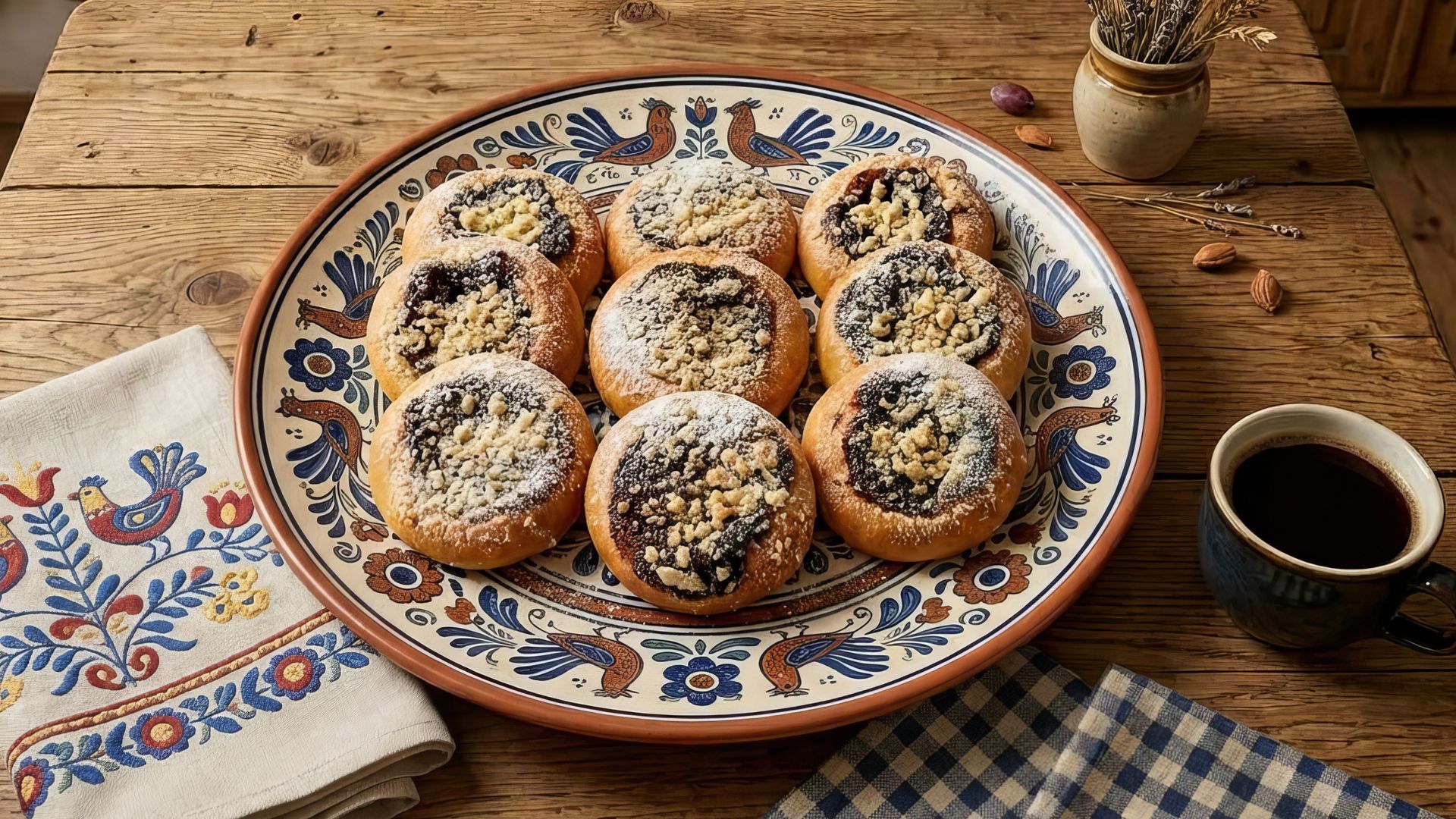
Traditional Moravian Kolaches
Visit our partners website.